Reducing Screen Time for Children: Helping Kids Thrive in a Digital World
Technology is woven into nearly every part of modern life. Smartphones, tablets, computers, and televisions have become part of daily routines for adults and children alike. Used well, technology opens doors to learning and information. But too much screen time can affect a young child’s physical health, emotional development, and social skills.
The goal for parents is not to eliminate technology. It is to strike a healthy balance: helping children keep pace with the modern world while also growing the interpersonal skills and human connections that will carry them through life.
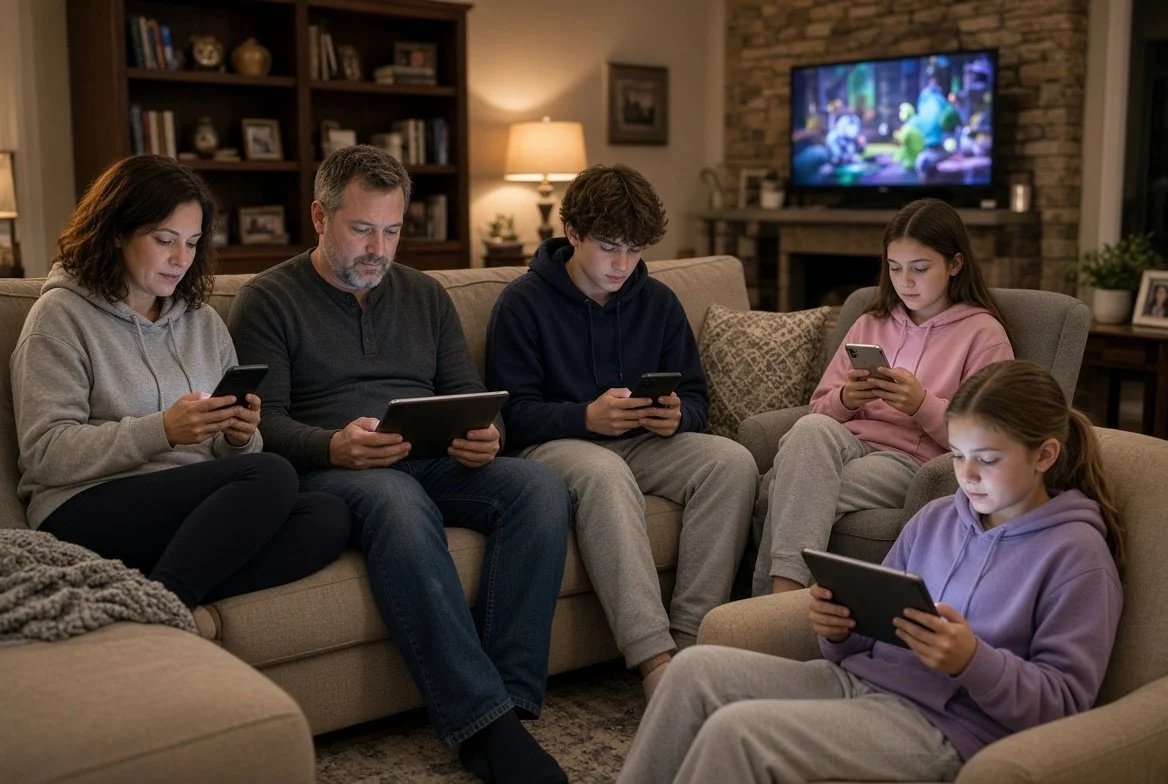
Screens off, conversation on: everyday talk is where children learn to listen, share, and connect.
I saw this in my own home. My family still gathered in the living room in the evenings, but the TV was blaring and every face glowed blue from a phone or an iPad. We were all in one room, and we weren’t together. That moment is what led me to start writing stories for my grandchildren, and it is why I believe so strongly in the ideas that follow.
Understanding the Impact of Screen Time
Young children learn best through interaction: talking, playing, exploring, and watching the world around them. When too much time is spent in front of screens, those real-life opportunities begin to shrink. Excessive screen time has been linked to shorter attention spans, disrupted sleep, and fewer chances to practice communication and empathy.
Children develop interpersonal skills through everyday moments with parents, siblings, friends, and teachers. They learn to listen, express their feelings, cooperate, resolve conflicts, and understand other points of view. When screens replace face-to-face time, children miss valuable chances to practice these essential life skills.
Creating Healthy Technology Habits
Reducing screen time starts with clear, consistent boundaries. Set reasonable daily limits on device use. For younger children especially, experts generally recommend limited, supervised screen time, with content that is educational and age-appropriate.
Create screen-free zones. Keep dining tables, bedrooms, and family gathering spaces free of devices. A family meal without screens is one of the simplest ways for parents and children to talk about their day, share ideas, and strengthen their bond.
Lead by example. Children naturally copy the adults around them. When parents put their phones away during conversations and family time, children learn that people matter more than notifications.
Encouraging Real-World Activities
Children thrive on activities that spark creativity, curiosity, and connection.
Get outside. Riding bicycles, playing sports, exploring nature, or simply playing in the park builds physical coordination while teaching teamwork and cooperation.
Get creative. Drawing, building with blocks, reading stories, and playing board games encourage imagination and problem-solving. They often involve playing with others, too, which teaches patience, sharing, and communication.
Get involved. Sports teams, music lessons, art classes, and community programs let children make friends, work toward shared goals, and learn to handle both success and disappointment gracefully.

Screens off, conversation on: everyday talk is where children learn to listen, share, and connect
Families play the most important role in shaping a child’s social and emotional growth. Quality time together builds trust and open communication. Simple activities such as reading together, cooking as a family, going for walks, or sharing stories create natural moments for meaningful conversation.
Encourage children to share their thoughts and feelings openly. When children feel heard and understood, they grow more confident in communicating with others, and that emotional security becomes the foundation for healthy relationships throughout their lives.
Family traditions matter too. Regular gatherings, weekend outings, and shared hobbies create lasting memories and remind everyone how much time together, free of digital distractions, is worth.
Teaching Balance in a Digital World
Technology itself is not the enemy. Used responsibly, digital tools can be powerful resources for learning and creativity. The goal is to teach children to use technology with balance and purpose.
Guide children toward content that encourages learning and curiosity rather than passive entertainment. Watch educational programs together and talk about what they learned, so screen time becomes a shared experience. And encourage children to create rather than simply consume: drawing, storytelling, or educational games make digital time far more productive.
[Image 3: family reading and learning together]
Caption: Reading, learning, and creating together turn family time into lasting growth.

Reading, learning, and creating together turn family time into lasting growth
Preparing Children for the Future
Our children are growing up in a world that will only become more digital. Our task is not to shield them from technology entirely, but to help them develop the emotional intelligence and people skills to thrive both online and in the real world.
Children who learn to balance screen time with real-life connection grow up with stronger communication skills, empathy, and self-confidence. They become adults who can work well with others, build meaningful relationships, and move through modern life with wisdom and resilience.
In the end, the most valuable gift we can give our children is not unlimited access to technology. It is a loving, interactive, and supportive home. When families make room for connection, conversation, and shared experiences, children develop the skills that will guide them for the rest of their lives.
Looking for screen-free stories to share at bedtime? Explore R. Suleman’s children’s books, written to spark imagination, kindness, and courage.